
If you have opened Instagram this week, you have probably already seen it: a friend who usually posts selfies in daylight suddenly looks like they walked out of a 1986 studio. Warm lights. Soft grain. Hair that has volume. Clothes that belong to another decade. That is the 1980s photo prompt ChatGPT trend, and it is not a vintage filter slapped on a phone picture.
People are uploading a recent photo, then using a ChatGPT image prompt to rebuild the whole frame as if the shutter clicked forty years ago. The question underneath the trend is simple and oddly personal: what would this picture have looked like if it had been taken in India in the 1980s?
You do not need a film camera, a costume cupboard, or a studio booking. You need a clear face photo, a prompt that names the decade in detail, and a generator that can actually follow it. You can do that in ChatGPT, or generate the same look for free in KnowAnt Image Studio.
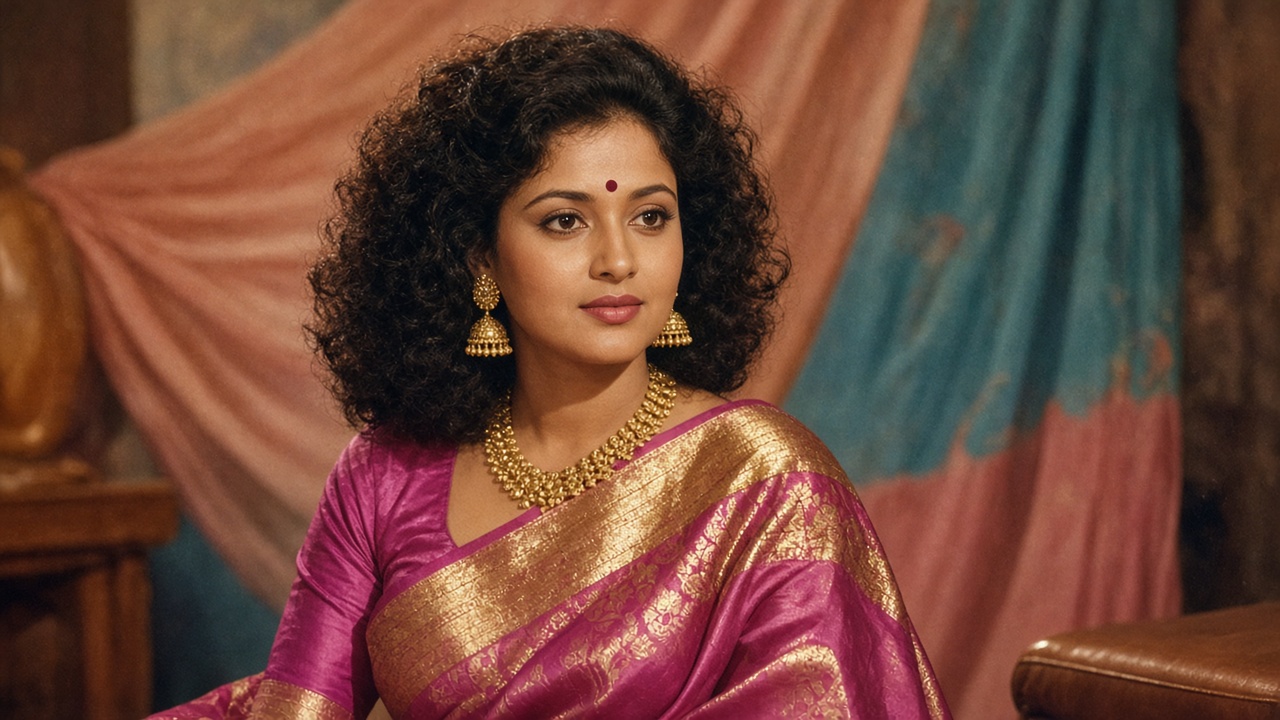
Table of Contents
- What the 1980s AI photo trend actually is
- Why a vintage filter is not enough
- How Malayalam TV stars pushed the look onto feeds
- How to make a 1980s photo with ChatGPT
- How to write a ChatGPT image prompt that looks analogue
- Copy-paste 1980s photo prompt ChatGPT examples
- Mistakes that make the picture look fake
- Captions, Stories, and the Add Yours sticker
- Generate the look for free in KnowAnt
- Frequently Asked Questions
- Conclusion
What the 1980s AI photo trend actually is
The trend is a full restyle, not a colour grade. A weak prompt says “make this vintage.” A strong 1980s photo prompt ChatGPT run tells the model:
- keep your face
- change the hair, clothes, jewellery, and background to match the decade
- light the scene like a film studio or a family flash photo
- add the texture of analogue film, not a sepia sticker
That is why the pictures do not all look the same. Some feel like a publicity still from a Malayalam or Hindi film. Some look like a page from a family album that lived in a steel almirah. Some look like a magazine cover. Some look like a still from a Doordarshan-era television portrait. A few even put you on a street with Ambassador cars and hand-painted shop boards.
The Indian version of the trend is especially fun because the 1980s had a very specific wardrobe. Women often get silk sarees, puff-sleeved blouses, a bindi, big gold jewellery, and hair with height. Men get collars that actually stand up, high-waisted trousers, a tucked shirt, sometimes a moustache, sometimes a hat that wandered in from a Western. If the prompt forgets those details, you get “old Instagram,” not 1985.
Why a vintage filter is not enough
A filter only touches the pixels that are already there. It can warm the highlights, crush the blacks, and sprinkle grain on a 2026 t-shirt. It cannot invent a painted studio backdrop. It cannot give you a silk saree. It cannot put an Ambassador car behind you.
A ChatGPT image prompt can do that because it is not editing the photo so much as reconstructing a new photograph around your face. The difference is obvious once you see both side by side:
- Filter: same haircut, same hoodie, brown overlay.
- Era rebuild: period clothes, period hair, period room, film colour, your face still recognisable.
That last part matters. If the model “improves” your jawline or swaps your eyes, the picture becomes a different person in costume. The prompts below lock identity on purpose.
How Malayalam TV stars pushed the look onto feeds
The trend did not stay in group chats. Malayalam television and reality-show faces started posting their own 80s avatars, and the comments filled up with people asking for the prompt.
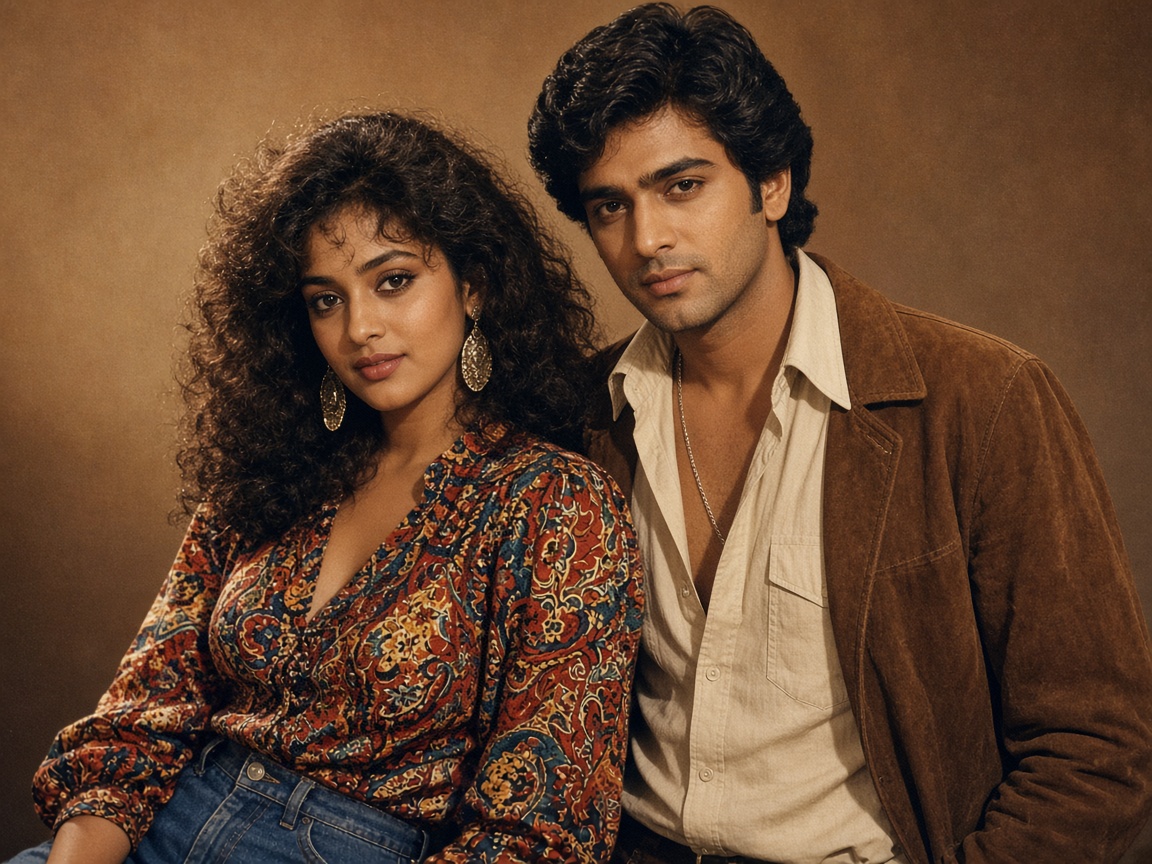
Aparna Thomas posted a small set of looks rather than one picture, each with a different retro hair and outfit. Abhirami Suresh went for a bright patterned shirt and denim, the kind of casual 80s frame that looks like a still from a music video. Pearle Maaney and Srinish Aravind posted as a couple, which is a different job for the model: two faces, one decade, matching light. Jasmin Jaffar leaned into the classic heroine silhouette — silk saree, puff sleeves, a bindi, quiet makeup. Cerena Ann Johnson went louder: colour, jewellery, the “diva still” energy. Alina Padikkal shared a playful throwback with her husband. Akhil Marar took the Western route: flared trousers, a wide collar, earthy tones, and a cowboy hat that should not work and somehow does.
You do not need to copy any of those people. The useful lesson is the range. One decade, many photographs. Your chatgpt image prompt should pick one of those worlds and commit to it.
How to make a 1980s photo with ChatGPT
Here is the workflow that actually works, whether you stay in ChatGPT or paste the same prompt into KnowAnt Image Studio.
1. Pick one photograph. Front-facing or three-quarter. Face in focus. No heavy sunglasses. No group of eight people unless you are ready to accept that someone will melt. A well-lit selfie beats a tiny crop from a concert.
2. Decide the photograph type before you write. Studio Bollywood, family album, wedding hall, magazine cover, television portrait, or street. Mixing all of them in one sentence is how you get a saree in a cowboy bar.
3. Upload the photo if the tool allows it. In ChatGPT, attach the image, then paste the prompt. In KnowAnt, open Image Studio, add your picture if you want a likeness, and paste the same 1980s photo prompt ChatGPT text into the box.
4. Name the decade, the country, and the film look. “1980s India,” “analogue camera,” “soft film grain,” “warm tungsten studio light” will do more than “vintage aesthetic.”
5. Say what not to do. No sepia. No wrinkles added for “age.” No face swap. No modern logos on clothes. No smartphone in the frame.
6. Generate twice. The first pass often gets the clothes right and the face slightly off, or the other way around. Keep the prompt, change one line — usually hair, jewellery, or background — and run it again.
If you already collect prompts for writing work, treat this the same way you would a tight brief: context, constraints, output. The ChatGPT prompt library is built for words; the blocks below are built for pictures.
How to write a ChatGPT image prompt that looks analogue
A usable chatgpt image prompt for this trend has six parts. You can keep them in this order every time.
- Task. Recreate / transform this photo as a 1980s photograph.
- Identity lock. Keep my facial features, skin tone, and expression. Do not make me a different person.
- Wardrobe and hair. Be specific. “Voluminous side-parted hair, silk saree, gold jhumkas, bindi” beats “old-fashioned clothes.”
- Setting. Painted studio backdrop, simple living room, wedding mandap, city street in 1987.
- Camera. Analogue film, soft focus, grain, warm light, slightly faded colour. Name the era of photography, not a filter pack.
- Negatives. Not a modern photo with a vintage overlay. No heavy sepia. No artificial ageing. Photorealistic.
If you skip identity lock, the model will “cast” someone prettier. If you skip negatives, you get a tea-stained postcard. If you skip setting, you get a face floating on beige.
That is the whole craft. The rest is taste.
Copy-paste 1980s photo prompt ChatGPT examples
Paste these as-is, then swap the clothing line if you want a different mood. Each one is a full ChatGPT image prompt, not a caption.
Classic Bollywood studio portrait
Transform this photo into an authentic 1980s Bollywood studio portrait taken in India. Keep my facial features, skin tone, and identity recognisable. Give me period-appropriate 1980s Indian clothing, hairstyle, and accessories. Use warm tungsten studio lighting, a painted fabric backdrop, soft focus, subtle analogue film grain, and slightly faded colour. Make it look like a real photograph shot on film in the 1980s, not a modern photo with a vintage filter. Do not change my facial structure or make me look like a different person. Keep the result photorealistic. Avoid sepia, heavy ageing, or cartoon styling.
1980s Bollywood heroine
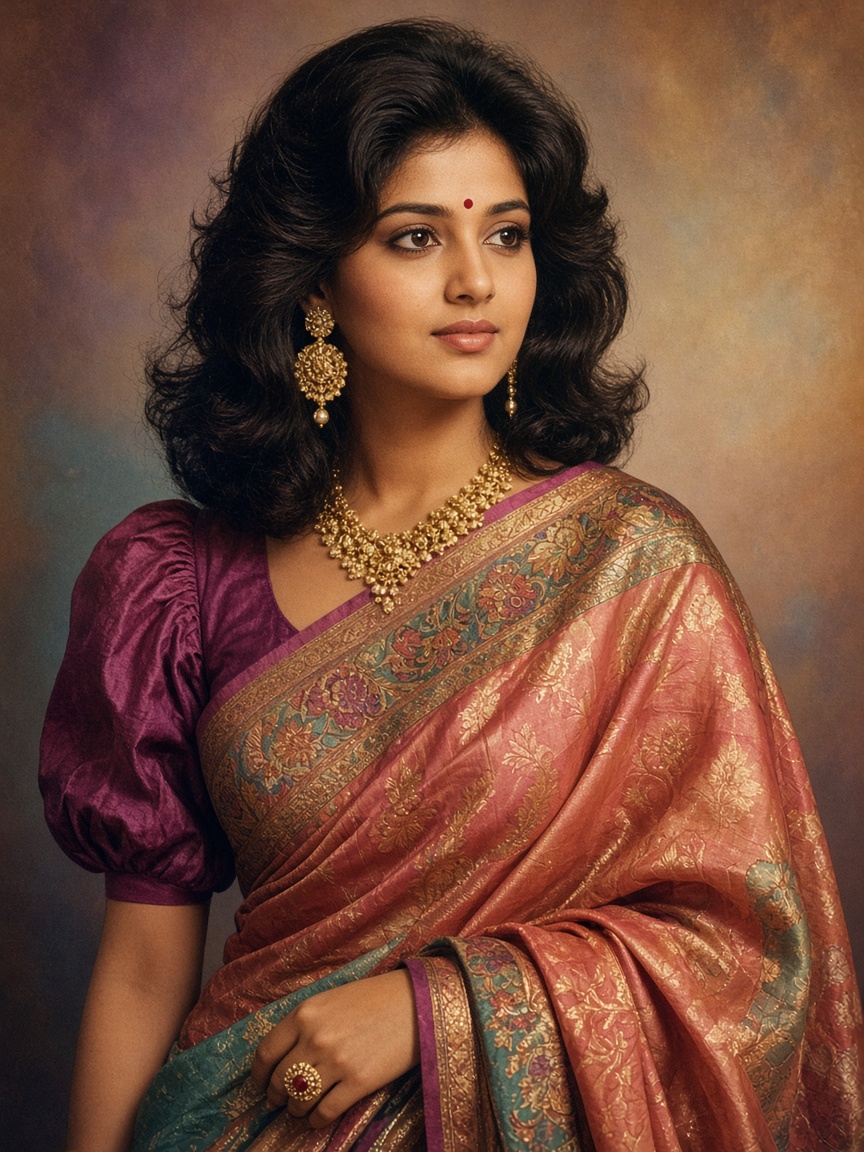
Turn this photo into a glamorous 1980s Bollywood heroine portrait. Keep my face recognisable and natural. Style the hair with a voluminous 1980s look, add a colourful silk saree, a puff-sleeved blouse, a bindi, and statement gold jewellery. Place me in a classic Indian photo studio with a painted backdrop. Use warm lighting, soft focus, analogue film grain, and the look of an old publicity still. Do not modernise the makeup. Do not add English text or watermarks.
1980s Bollywood hero
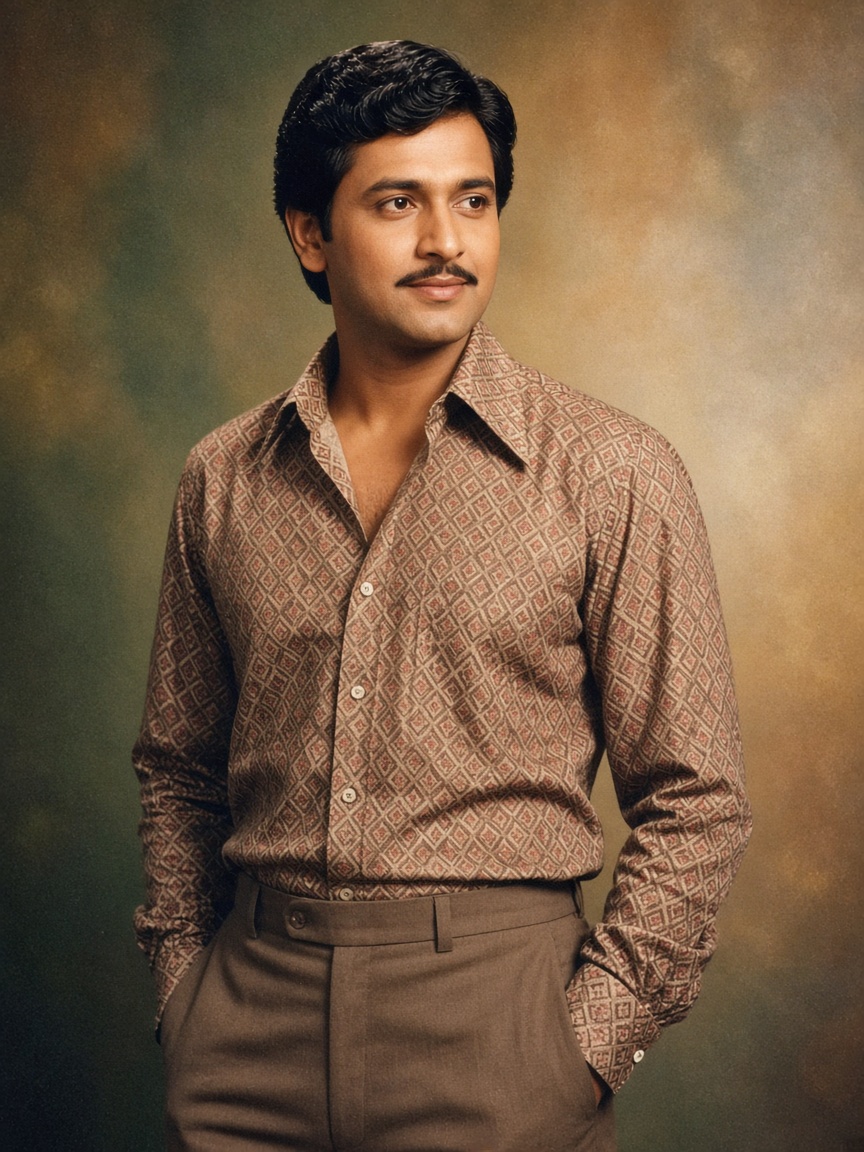
Recreate this photo as a 1980s Bollywood hero studio portrait. Keep my facial identity unchanged. Give me an authentic period hairstyle, a thin moustache only if it suits my face, a shirt with a prominent collar, and high-waisted trousers. Use a classic painted studio backdrop, analogue film grain, warm lighting, and slightly faded colours. Make it look like a genuine 1980s photograph from India, photorealistic, no digital glow.
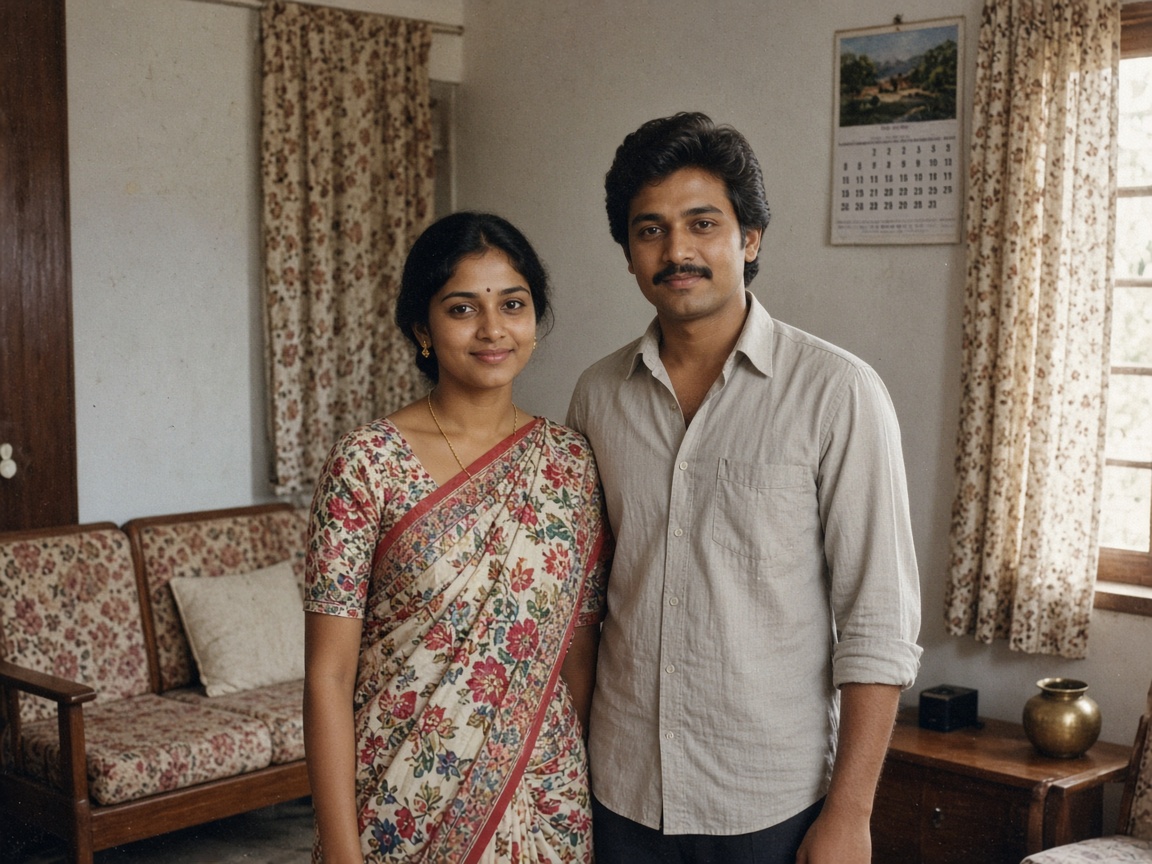
Old family album
Recreate this photo as if it were taken for an Indian family album in the mid-1980s. Keep the face and expression natural. Add period-appropriate clothes, hairstyle, and a simple indoor background: sofa, curtains, maybe a wall calendar. Use the look of a compact analogue camera, slight grain, soft indoor lighting, and realistic film colour. Avoid a sharp modern digital look, beauty filters, and studio glamour lighting.
Wedding album, 1980s India
Imagine this photo was taken at an Indian wedding in the 1980s. Keep the people's faces recognisable. Recreate the clothing, hairstyles, jewellery, decorations, lighting, and photography style of a wedding from that decade. Use realistic analogue film grain and colour, with the slightly imperfect look of an old family photograph. Do not add modern LED lights, drones, or current fashion.
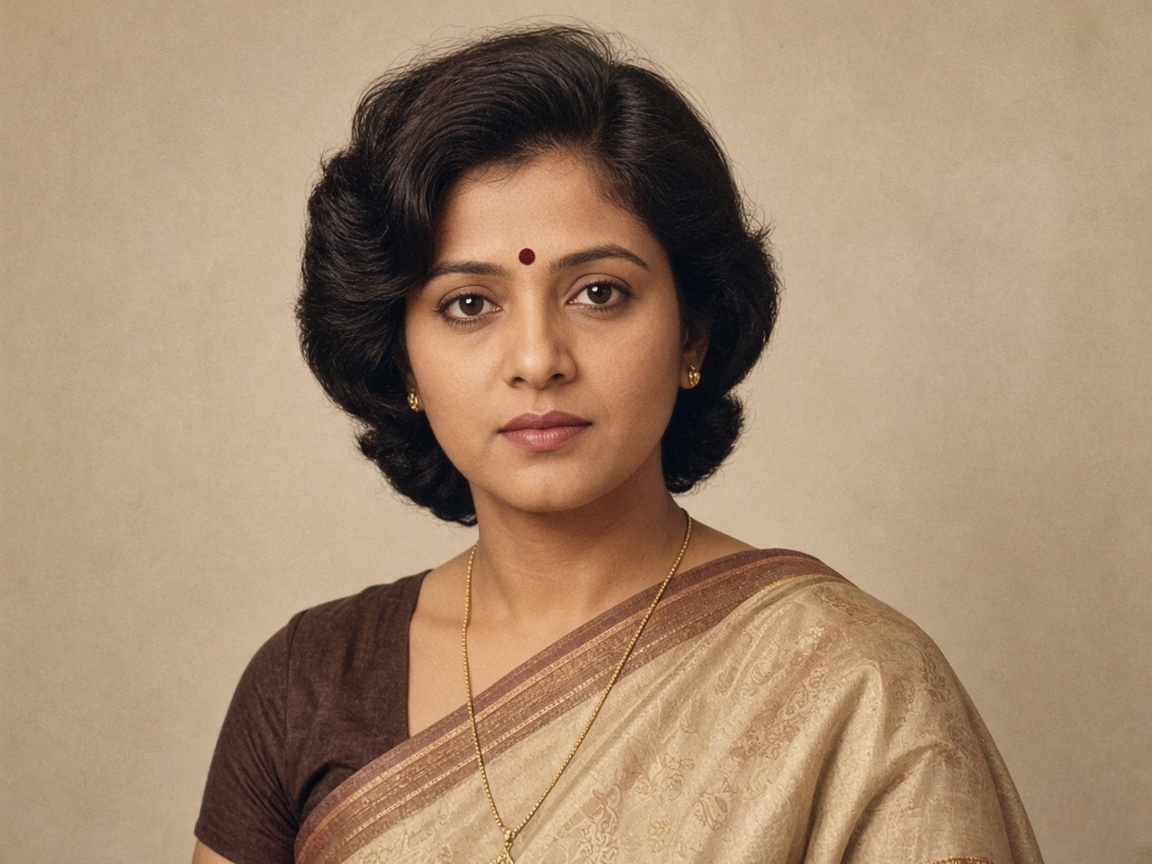
1980s magazine portrait
Turn this photo into an Indian magazine portrait from the 1980s. Keep my face recognisable and realistic. Use period-appropriate hair, clothing, jewellery, and makeup, with a simple studio background, dramatic but natural lighting, soft focus, and analogue film texture. Make it look like a real editorial photograph from the decade, not a social-media collage. No masthead, no cover lines, no logos.
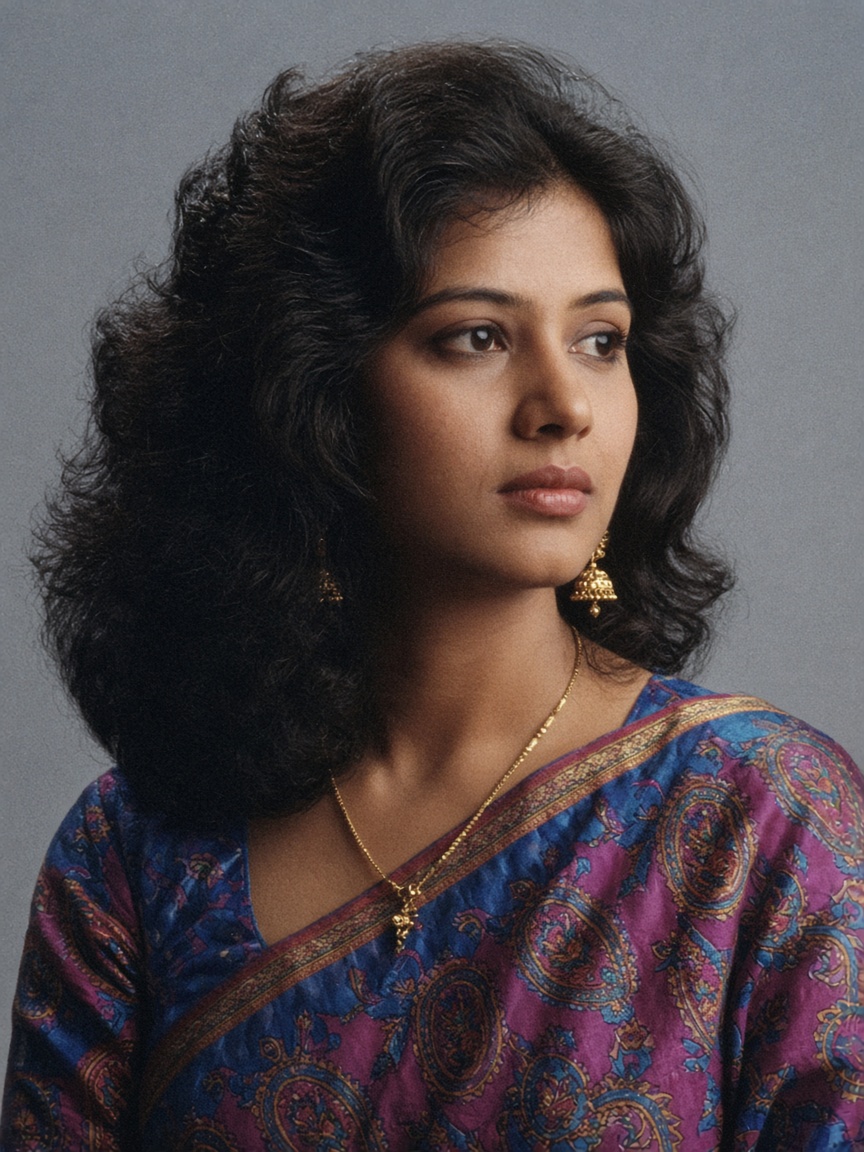
Doordarshan-era television portrait
Recreate this photo with the visual style of an Indian television portrait from the 1980s. Keep my face and identity recognisable. Use authentic period clothing, a neat 1980s hairstyle, modest jewellery, a simple studio background, warm lighting, and analogue film grain. The image should feel like it was photographed in India during the Doordarshan era: calm, formal, photorealistic. No modern news-set graphics.
Retro street photograph, 1987
Imagine this photo was taken on an Indian street in 1987. Keep my face and identity recognisable. Recreate the surroundings, clothing, hairstyle, vehicles, signboards, and colours to match India in the late 1980s. Use realistic daylight, analogue film grain, and the texture of a photograph printed from film. No smartphones, no glass office towers, no modern cars.
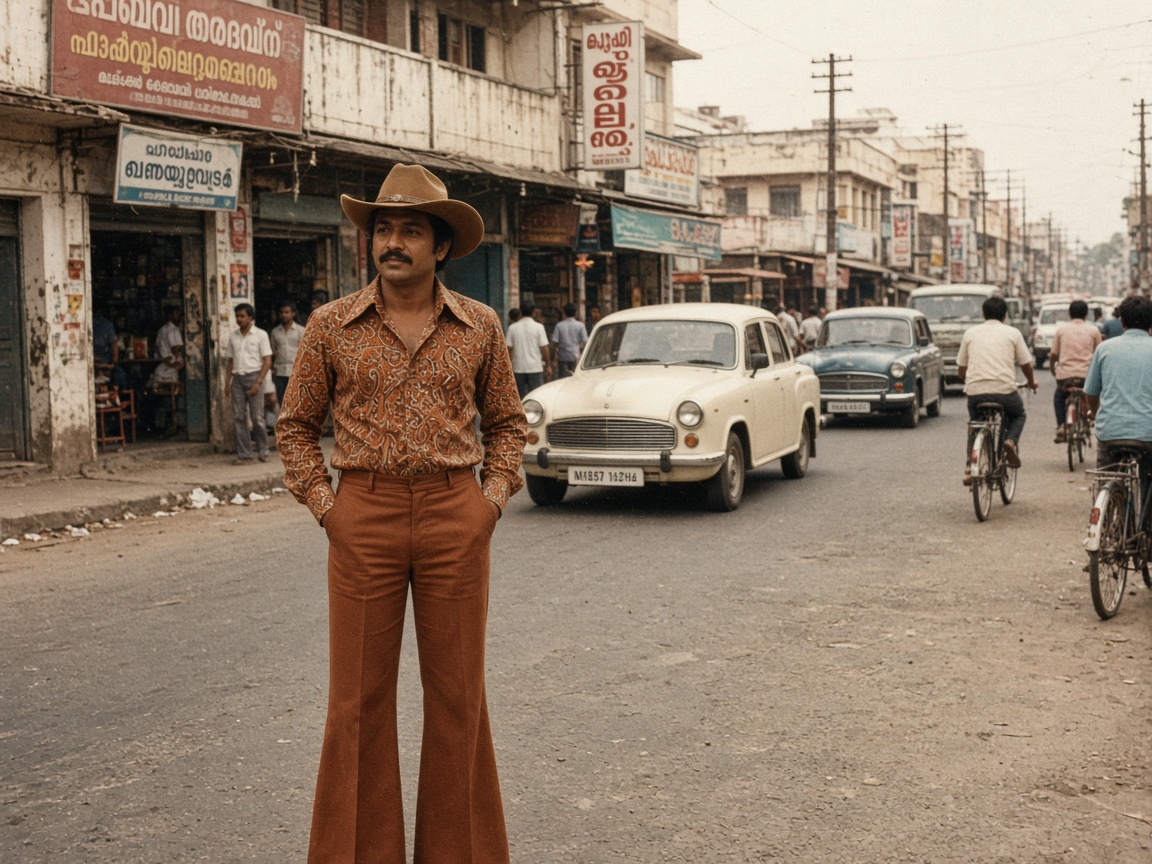
If you want the Akhil Marar flavour without copying him, add one line to the street prompt: flared trousers, a wide collar, earthy colours, and a cowboy hat. If you want the Jasmin Jaffar flavour, stay with the heroine prompt and keep the blouse sleeves puffed.
Mistakes that make the picture look fake
Asking only for “vintage.” Vintage is 50 years of photography. Name 1984, 1986, or 1988.
Letting the model age you. The trend is you in 1980s clothes, not you as a 60-year-old. Put “do not age my face” in the prompt.
Overdoing grain until the photo looks dirty. Subtle grain reads as film. Heavy noise reads as a broken JPEG.
Mixing decades. A 1970s bell-bottom prompt plus 1990s scrunchies plus 1980s studio light will look like a costume party.
Leaving modern objects in. Watches with smart faces, white earbuds, glass buildings, SUVs. Call them out in the negatives.
Using a group photo as the first test. Start with one person. Couples are the second test. Bigger groups are a gamble.
Forgetting the background. Hair and saree can be perfect and still look like 2026 if the wall behind you is a WeWork mural.
Captions, Stories, and the Add Yours sticker
The picture is only half the post. People are putting these on Instagram Stories with an “Add Yours” sticker so friends run the same 1980s photo prompt ChatGPT experiment. On the grid, a short line works better than a history essay.
A few directions that do not sound like everyone else:
- “If this had been taken in 1986.”
- “Family album energy. Steel cupboard not included.”
- “Same face. Different decade.”
- “Doordarshan lighting, Sunday afternoon.”
- “Not a filter. A whole wardrobe.”
If you need a longer bank of lines, use Instagram captions for boys or the caption list for boy posts, then trim. For the profile itself, how to write an Instagram bio and Instagram bio ideas for girls keep the account matching the new pictures. Draft the caption on KnowAnt and run it through the grammar checker if you are posting in English and do not want a stray typo sitting under a perfect still.
Generate the look for free in KnowAnt
ChatGPT is one place to run a chatgpt image prompt. It is not the only place, and you do not have to stay in a chat thread to get a still you can download.
Open KnowAnt Image Studio, paste any prompt from this page, and generate the 1980s portrait there. If you have a reference photo, attach it so the face stays yours. If you only have a description, start with the Bollywood studio block and add your hair, clothes, and city.
That is the practical version of the trend: one prompt, one face, one decade. Generate it for free in Image Studio, save the file, then post it. If you want to write a longer caption after, KnowAnt will help you edit the words the same way the studio helps you edit the picture.
Frequently Asked Questions
What is a 1980s photo prompt ChatGPT?
It is a written instruction that tells an image model to rebuild your picture as a photograph from the 1980s. A good 1980s photo prompt ChatGPT keeps your face, changes hair and clothes, and asks for analogue lighting and film grain instead of a brown filter.
Can I use the same ChatGPT image prompt in other tools?
Yes. The prompt is just text. Paste it into KnowAnt Image Studio and generate there. Keep the identity-lock lines if you upload a selfie.
Why does my result look like a different person?
The model is filling in a “pretty 80s star” instead of you. Tighten the identity lock: facial structure, skin tone, eye shape, no beautification. Use a sharper source photo.
Should I add a moustache or big hair if I do not have them in real life?
Only if you want that joke. The trend still works with your real face and period clothes. Hair and wardrobe carry most of the decade.
Is this the same as a Ghibli-style AI trend?
No. Ghibli-style prompts turn a photo into illustration. This trend stays photorealistic and aims for film photography from a specific decade.
Can I do couples and families?
Yes, but say “keep both faces recognisable” and use a photo where both people are equally lit. Wedding-album and family-album prompts are built for that.
What should I avoid in a chatgpt image prompt?
Vague words like “aesthetic,” “vibes,” and “old-timey.” Also avoid asking the model to make you older. The 1980s look is styling, not ageing.
Conclusion
The viral 80s pictures work because they commit. They pick a studio, a living room, a street, or a television set, then they dress the person for that room. A lazy prompt gives you a filter. A careful 1980s photo prompt ChatGPT gives you a photograph that could have lived in someone’s album.
Copy one block from this page. Lock your face. Name the clothes. Name the film. Then generate it — in ChatGPT, or for free in KnowAnt Image Studio. If the first frame is almost right, change one line and run it again. That is how these portraits stop looking like a trend and start looking like they were taken in 1986, on purpose.