“This AI Translator helps me understand academic materials in multiple languages while keeping the meaning accurate. It's much better than traditional translators.”

Annika Palmari
International Student
Draft short stories, bedtime tales, creative writing prompts, and video scripts from a few lines of idea — choose genre, tone, length, and characters, then edit until the voice is yours. Useful for brainstorming, classroom storytelling exercises, and content outlines; not a substitute for disclosing AI help when your school or publisher requires it. Free on this page, with deeper learning workflows in Knowant Tutor.
No story generated yet
Record conversations, generate summaries and action items, then send follow-ups without rewriting the meeting.
Explore mystery red herrings, cozy fantasy, dystopian setups, comedy timing, or motivational parables without committing to a full outline first. Specify reading level for children’s content and content warnings when writing horror or intense themes so the draft fits your audience and platform rules.
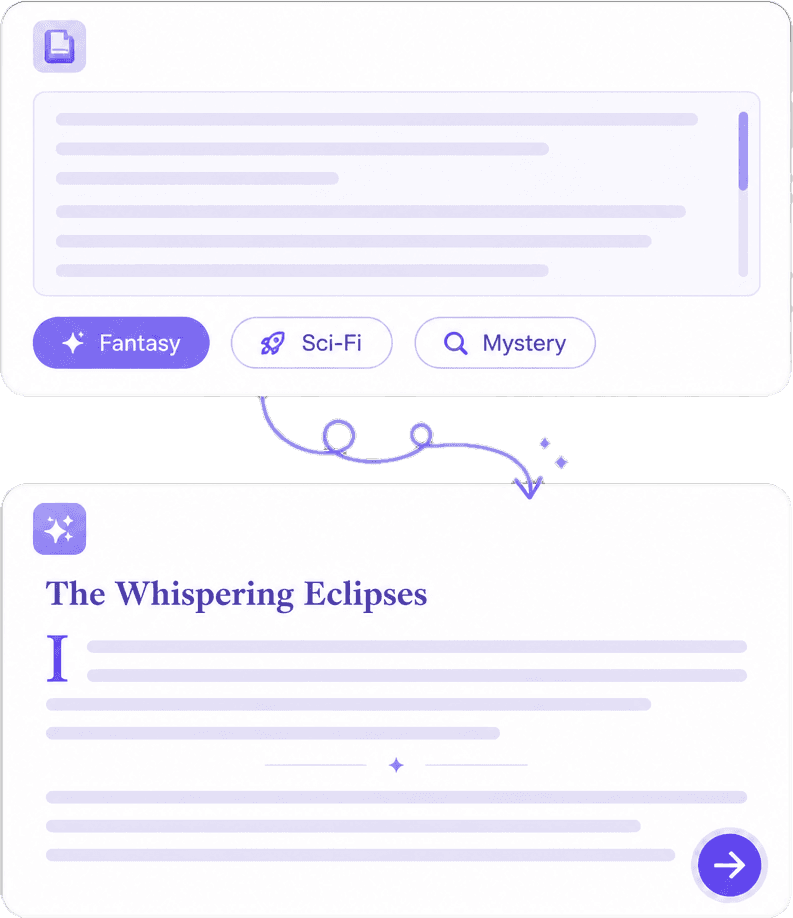
Lock in protagonist goals, antagonist pressure, and where the scene happens — urban apartment, medieval village, space station — before generation. Adjust story length from flash fiction to multi-scene scripts. After the first pass, regenerate single sections instead of restarting when one beat feels off.
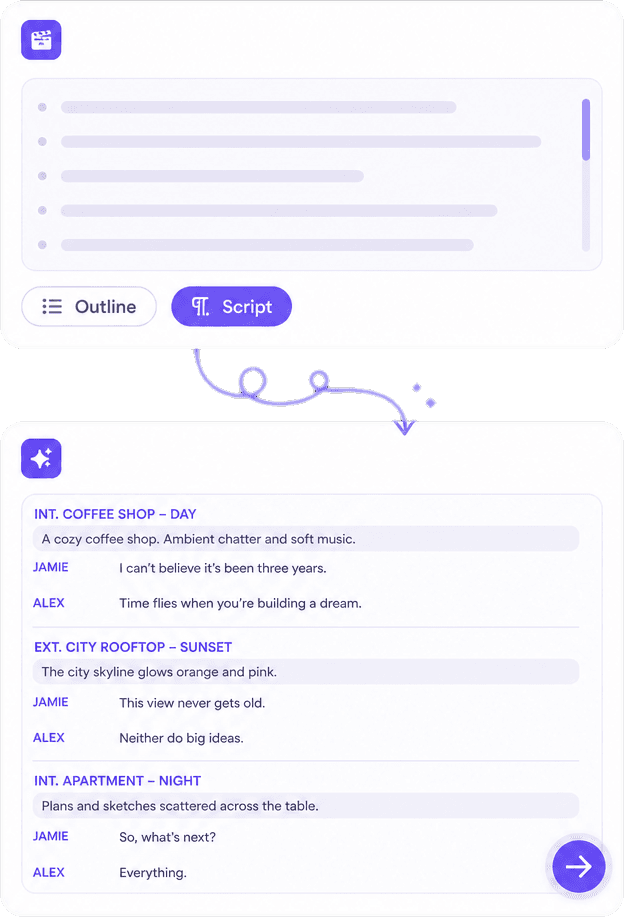
Get narration-friendly paragraphs, dialogue lines, and beat labels suited to Shorts and TikTok storytelling formats. Read aloud while editing: spoken rhythm differs from essay prose. Pair with Knowant voice tools when you want to hear a rough read-through before recording your final take.
Blank pages slow writers and students alike. AI drafts give structure — opening, rising action, climax — so you spend energy on originality, theme, and polish. Teachers can use outputs as discussion starters; creators can storyboard videos faster. For structured creative writing lessons and feedback loops, continue at https://www.knowant.com/product/learn-with-ai.
Use AI for structure and first lines, then replace generic phrases with your signature style.
Prompt with motives and flaws so generated scenes center on decisions, not only description.
Hooks, twists, and outros sized for vertical video — trim to your target seconds in edit.
Flash fiction, chapter snippets, or full script scenes — scale up after you validate the premise.
Prompt with intent, generate a draft, then rewrite — three steps that keep stories original and publishable.
Include genre, audience, setting, main conflict, and any must-have details (names, era, moral). The clearer the brief, the less generic the draft.
Pick prose vs script layout, approximate word count or number of scenes, and tone (humorous, dark, hopeful). Generate, then scan the ending first — if the climax is weak, adjust the prompt and retry.
Rewrite in your voice, fact-check non-fiction elements, and follow platform disclosure rules. For school creative writing, confirm whether AI brainstorming is allowed and cite accordingly.
Authors, educators, and short-form creators use Knowant to unblock ideas — then edit aggressively for voice and accuracy.
“This AI Translator helps me understand academic materials in multiple languages while keeping the meaning accurate. It's much better than traditional translators.”
Annika Palmari
“I use it to generate eye-catching YouTube thumbnails and social media graphics. The image quality is fantastic and saves me a lot of time.”

Ryan Hoffman
“Converting invoices and purchase reports into Excel has become effortless. The table recognition is incredibly accurate.”

Austin Distel
“I use it to generate social media posts and ads. The content is always engaging and relevant to my audience.”

Brooke cagle
Genres, video scripts, originality, classroom use, and responsible publishing with AI-assisted drafts.
An AI story generator turns prompts — genre, characters, plot ideas, length — into narrative drafts or scripts using language models. It helps writers overcome blank-page friction and explore alternate plot paths quickly. Knowant’s tool produces starting text you should edit for originality, sensitivity, and factual accuracy; it does not replace human authorship when policies require sole human creation.
Yes. Ask for short-form script structure with a strong hook in the first lines, clear conflict, and a concise payoff suited to vertical video. Time your read-aloud after editing; on-screen text and B-roll will change pacing. Always comply with platform community guidelines and music licensing separate from the text draft.
Change distinctive phrases, merge ideas from multiple generations, add personal anecdotes, and alter plot outcomes so the work reflects your choices. Avoid publishing raw output for contests or classes that require fully original human writing. When collaboration with AI is allowed, disclose it the way the organizer or instructor specifies.
You can generate stories on this page within free usage limits. Longer manuscripts, higher daily caps, and companion learning features may require an account or paid plan. Creative writing coursework with feedback loops is a strong fit for Knowant Tutor at https://www.knowant.com/product/learn-with-ai.
Many teachers use AI drafts as prompts for analysis — students identify weak dialogue, revise endings, or compare two generated versions. Set clear rules: whether students may paste AI paragraphs into graded work, how to cite AI assistance, and expectations for human revision. Use stories as teaching artifacts, not as finished student submissions without editing.
Common genres include adventure, romance, mystery, horror, fantasy, science fiction, comedy, drama, historical fiction, and children’s tales. Specify age range and tone to reduce inappropriate content. You remain responsible for reviewing the draft before sharing with minors or publishing publicly.
You can generate scene chunks or chapter summaries iteratively, keeping a manual story bible for continuity — character eye color, timeline, and subplots. AI may contradict earlier details; track facts in your own notes and fix inconsistencies during revision. Novel-length quality still depends on sustained human editing.
The story generator produces complete drafts from prompts — best for speed and experimentation. Knowant Tutor at https://www.knowant.com/product/learn-with-ai supports instructional use: writing exercises, analyzing literary devices, and practicing revision strategies with guidance. Draft here; deepen craft and classroom learning in Tutor.
 Knowant
Turn a premise into a complete narrative draft: pick genre and length, name characters, set tone, and generate prose or scene-by-scene scripts for podcasts, Reels, and Shorts. Treat AI output as raw material — refine word choice, remove clichés, and verify that facts in historical or educational stories are correct before you publish or submit class work.