
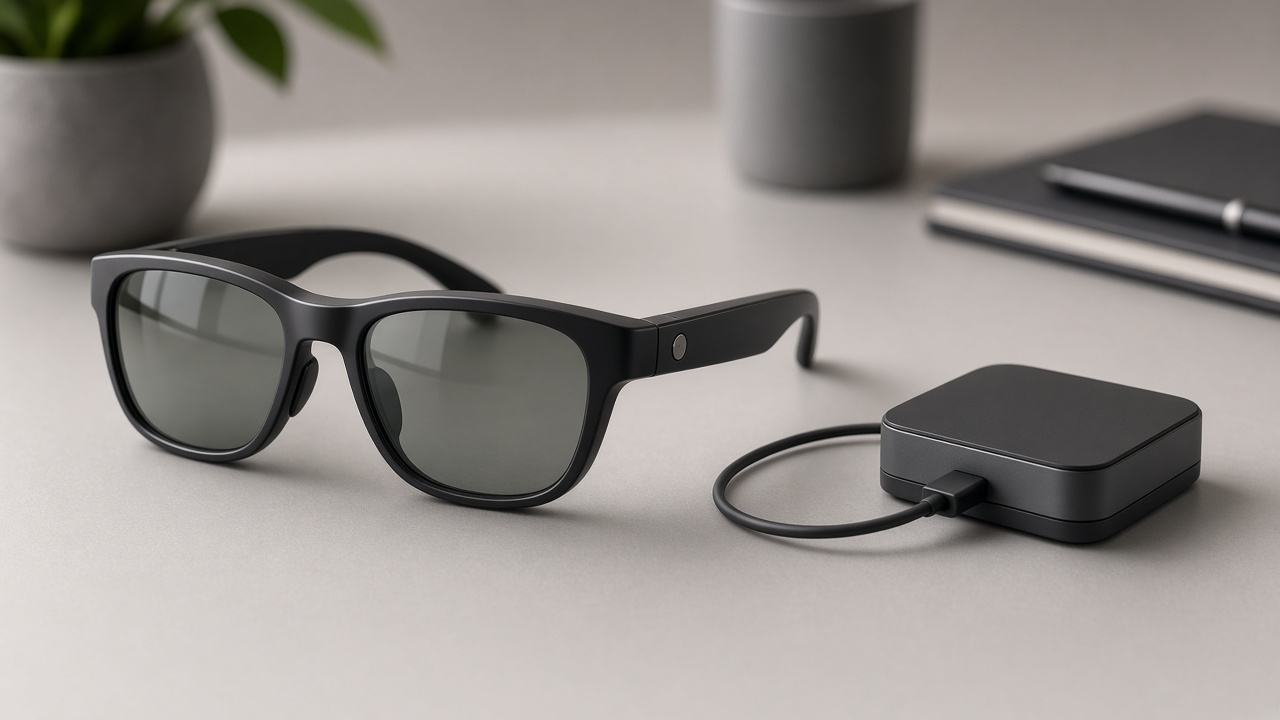
Meta VR Glasses and Ray-Ban Meta Audio are the two wearable headlines from Meta Connect 2026: one is a full virtual-reality headset split into glasses plus a compute puck; the other is Meta’s first camera-free Ray-Ban smart glasses built around audio, calls, and music.
In short: VR Glasses start at $1,299 and arrive Spring 2027. Ray-Ban Meta Audio is $349, goes on sale October 13, weighs 43g, and skips the camera that made earlier Meta Ray-Bans so controversial.
At KnowAnt, we break hardware launches into direct answers first — price, specs, dates — then the context. If you are writing about wearables or AI agents in the same Meta ecosystem, our Meta Muse AI Agent explainer covers the personal-agent side of that story.
Quick Answer: What Did Meta Announce?
| Product | What it is | Price (US) | Availability |
|---|---|---|---|
| Meta VR Glasses | Display glasses + wired compute puck | From $1,299 | Spring 2027 |
| Ray-Ban Meta Audio | Camera-free, audio-first smart glasses | $349 | October 13 |
One-line take: Meta is pushing immersive VR in a lighter form factor and offering an audio-only Ray-Ban path for people who want smart glasses without a camera pointed at the world.
Table of Contents
- Quick Answer: What Did Meta Announce?
- Meta VR Glasses: Specs and Design
- Meta VR Glasses Features Worth Knowing
- Ray-Ban Meta Audio: Specs and Price
- Why Camera-Free Glasses Matter
- Meta VR Glasses vs Ray-Ban Meta Audio
- Who Should Buy Which?
- Frequently Asked Questions
- Bottom Line
Meta VR Glasses: Specs and Design
Meta VR Glasses use a two-part system:
- The glasses hold the displays and sensors
- A connected puck holds compute, storage, and battery
- An optical cable links the two
That split is why the frames can stay light: about 100 grams for the glasses alone.
| Spec | Meta VR Glasses |
|---|---|
| Design | Glasses + compute puck (optical cable) |
| Glasses weight | ~100g |
| Displays | Micro OLED, 5K, 37 pixels per degree |
| HDR / picture | Dolby Vision |
| Audio | Spatially aware speakers with Dolby Atmos |
| Chipset | Snapdragon Reality Elite |
| Battery (with puck) | Up to ~3 hours |
| Puck charging | 45W fast charge |
| Input | Eye tracking + hand gestures |
| AI | Meta AI agent built into the OS |
| Certifications / content | IMAX Enhanced; 3D movies; Xbox Cloud Gaming |
| Standout call feature | Hologram Calling |
| Price | From $1,299 (US) |
| Ship window | Spring 2027 |
Meta VR Glasses Features Worth Knowing
Immersion without a face computer. Micro OLED 5K panels at 37 PPD plus Dolby Vision are aimed at cinema-like watching — Meta also flags IMAX Enhanced and 3D movie support.
Cloud gaming. Xbox Cloud Gaming support means the puck/glasses combo is pitched as a living-room / travel VR play device, not only a film viewer.
Hologram Calling. Meta describes photorealistic video-call presence with real-time facial expressions and reactions — a social feature that depends on the sensor stack as much as the display.
Hands and eyes as the remote. Built-in sensors let you steer the experience with eye movements and hand gestures, with Meta AI sitting in the OS for assistant-style help.
Trade-off to expect: you still carry a puck and a cable. The glasses get lighter; the system as a whole does not disappear into a single pair of frames.
Ray-Ban Meta Audio: Specs and Price
Ray-Ban Meta Audio is Meta’s first camera-free Ray-Ban smart glasses line: phone calls, music, and open-ear audio without a capture camera on the frame.
| Spec | Ray-Ban Meta Audio |
|---|---|
| Camera | None (audio-only) |
| Weight | 43g |
| Battery (glasses) | Up to 12 hours |
| Battery (with case) | Up to 48 hours |
| Styles | New Clubmaster and Burbank; 23 color/lens combinations |
| Price | $349 |
| On sale | October 13 |
Compared with camera Ray-Bans, Meta positions Audio as lighter, longer-lasting, and cheaper — useful if you mainly want open speakers for podcasts, navigation prompts, and calls while keeping awareness of the street.
Everyday audio-first use cases that do not need a camera include hands-free music, spoken directions, and accessibility flows such as audio descriptions for people who are blind or low-vision. Camera models still exist for first-person capture; Audio is the privacy-calmer sibling.
Why Camera-Free Glasses Matter
Camera-equipped smart glasses have been stuck in a public-trust fight. Wearers have faced venue bans, street hostility, and a reputation problem — “creepy glasses” shorthand — driven by non-consensual filming fears. An LED recording light helps only so much when workarounds exist and when people cannot tell whether a stranger’s frames are recording.
Ray-Ban Meta Audio does not erase that debate. Camera Ray-Bans remain on sale. But an official no-camera SKU does three practical things:
- Gives buyers who want audio + AI help without capture a clear product
- Lowers the social cost of wearing Meta frames when cameras are the objection
- Makes “are those filming?” less automatic — some Meta glasses have cameras; some do not
Industry analysts often call this a half-step sideways: get people comfortable with glasses-as-computer, while camera models keep feeding AI with visual context. Meta says Audio was in development for years, not a weekend panic ship — timing still lands squarely in a privacy backlash cycle.
Regulation and social norms are unfinished business. Audio-only does not replace rules for camera wearables; it just gives the market a less fraught option.
Meta VR Glasses vs Ray-Ban Meta Audio
| Meta VR Glasses | Ray-Ban Meta Audio | |
|---|---|---|
| Category | Immersive VR / spatial display | Everyday audio smart glasses |
| Camera | Sensor/display system (VR stack) | No camera |
| Form | Glasses + puck + cable | Standalone Ray-Ban frames |
| Weight (wearable) | ~100g glasses | 43g |
| Battery story | ~3 hours with puck | ~12h / ~48h with case |
| Price | From $1,299 | $349 |
| When | Spring 2027 | Oct 13 (sale start) |
| Best for | Movies, cloud games, hologram calls | Music, calls, maps, no-camera wear |
They are not competitors. One is a living-room / immersive device. The other is all-day streetwear electronics.
Who Should Buy Which?
Consider Meta VR Glasses if you want a lighter-feeling VR display for films, IMAX-style watching, hologram-style calls, and cloud gaming — and you can wait until Spring 2027 and budget from $1,299.
Consider Ray-Ban Meta Audio if you want Ray-Ban form factor smarts without a camera, care about battery and weight, and want something you can buy from mid-October at $349.
Stick with camera Ray-Bans if first-person photo/video and visual AI lookups are the point of the purchase — knowing the social and venue friction that can come with them.
Wait if you need a single pair that is full VR and all-day sunglasses with no cable and no controversy. That product is still not this announcement.
Frequently Asked Questions
What are Meta VR Glasses?
Meta VR Glasses are Meta’s virtual reality glasses announced at Meta Connect 2026. Displays and sensors sit in the frames; compute, storage, and battery live in a connected puck linked by an optical cable.
How much do Meta VR Glasses cost?
They start at $1,299 in the US.
When do Meta VR Glasses release?
Meta says Spring 2027.
How heavy are Meta VR Glasses?
The glasses portion weighs about 100 grams. The puck is separate.
What chipset do Meta VR Glasses use?
They are powered by Qualcomm’s Snapdragon Reality Elite.
What is Hologram Calling on Meta VR Glasses?
Meta’s name for photorealistic video calling that aims to show a lifelike representation of you with real-time facial expressions and reactions.
What is Ray-Ban Meta Audio?
Ray-Ban Meta Audio is Meta’s first camera-free Ray-Ban smart glasses product — audio, calls, and music without a built-in camera.
How much is Ray-Ban Meta Audio?
$349, with sales starting October 13. Meta lists 23 color and lens combinations in Clubmaster and Burbank styles.
How long does Ray-Ban Meta Audio battery last?
Up to about 12 hours on the glasses and up to 48 hours with the charging case, per Meta’s claims.
Why did Meta make camera-free smart glasses?
Camera Ray-Bans drew privacy backlash, venue bans, and “creepy glasses” branding in public debate. Audio-only glasses offer the music/calls/navigation use case without capture hardware. Meta says the product was in development for roughly two years; it also lands as a cheaper, lighter, longer-battery option beside camera models.
Do camera-free glasses mean Meta is ending camera Ray-Bans?
No. Camera-equipped models remain part of the lineup. Audio is an additional SKU, not a full replacement.
Can Meta VR Glasses play games?
Yes — Meta cites Xbox Cloud Gaming support, alongside 3D movies and IMAX Enhanced content.
Bottom Line
At Connect 2026, Meta split the wearable story in two. Meta VR Glasses chase immersive media with a 100g display frame, a Snapdragon Reality Elite puck, Dolby Vision/Atmos, and Hologram Calling — for $1,299 in Spring 2027. Ray-Ban Meta Audio chases everyday wear with no camera, 43g, long battery, and a $349 price from October 13.
Buy Audio if privacy optics and all-day listening matter now. Wait for VR Glasses if cinema-grade immersion and hologram calls are the goal. And treat camera smart glasses as a separate social contract — one that Audio deliberately steps around.
For more Meta AI product context beyond the frames, see Meta Muse AI Agent explained on KnowAnt.